
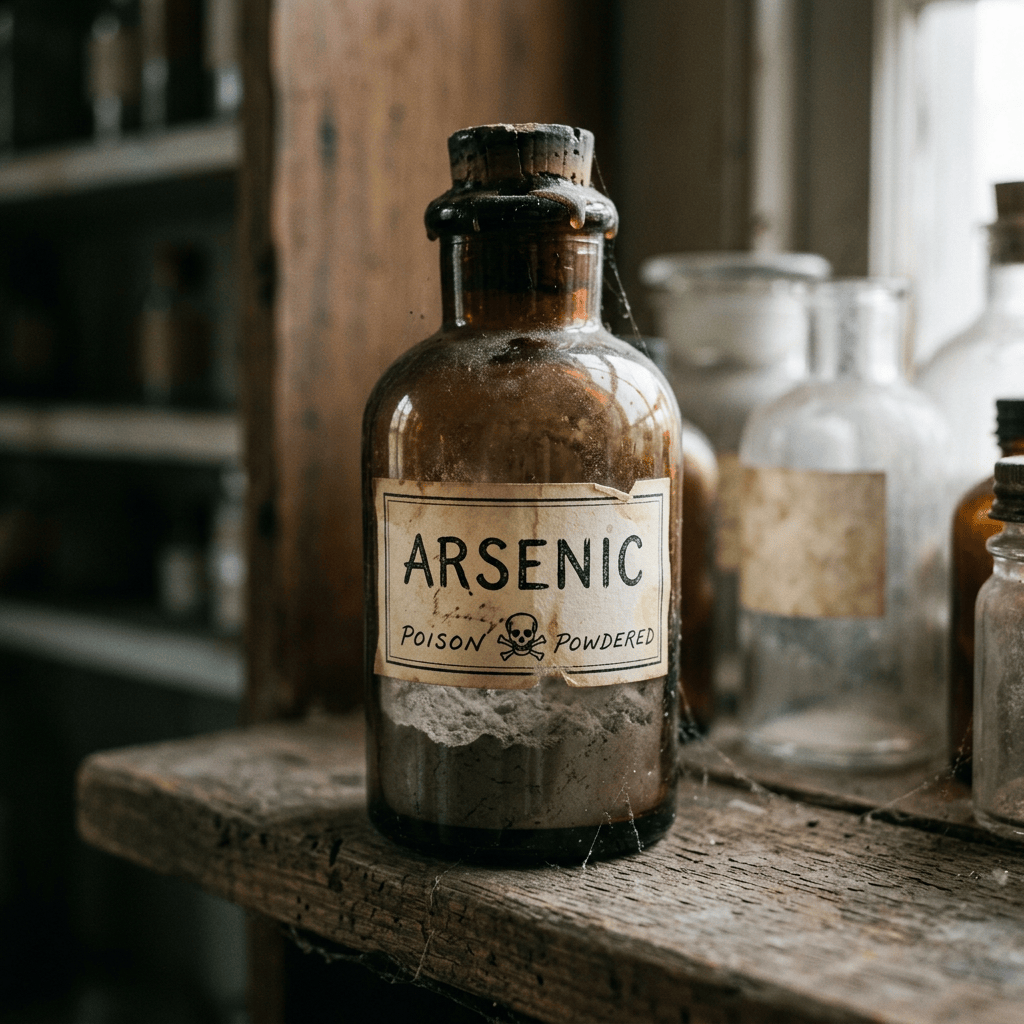
On 19 March 1841, nonagenarian farmer and ‘cow-leech’ (veterinarian) James Inglett appeared at the Huntingdon Spring Assizes, indicted for ‘feloniously killing and slaying’ Elizabeth Holt*, ‘by administering a certain noxious inflammatory drug.’
Mr Gunning, the Prosecuting counsel, opened proceedings. The first witness called was Mary Barnaby, Elizabeth’s sister. The witness testified that James Inglett called at the family home in Houghton, close to Huntingdon, where the two sisters lived with their mother in December 1840.
Elizabeth Holt had been ill for some time. Mr Girling, the local apothecary, had prescribed several treatments, none of which cured her. As a last resort, the family summoned James Inglett, who was known to the family, and due ‘to his long acquaintance with the healing art had caused him to be regarded with great respect among the simple people of his neighbourhood.’
Inglett decanted a measure of a medicine into a cup, and Elizabeth Holt swallowed it. Mary Barnaby told Judge Sir N.C. Tindal, presiding over the trial, that the substance made Elizabeth ‘very sick that night’. The following morning, the patient felt better, after taking some pills from apothecary Girling.
Mr Byles, the counsel for the defence, cross-examined the witness as to whether the deceased had been ill for a long period of time; Barnaby averred that her sister had been sick for some time and was not expected to live.
Byles had been the defence counsel for Joseph Frankhome, an 18-year-old labourer, who had been indicted for the rape of Ann Blackwell in August 1840; the press deemed the evidence heard in court as ‘wholly unfit for publication’. Byles secured an acquittal for the defendant, who, if he had been found guilty, would have been facing the death penalty.
Elizabeth Holt died on Wednesday 13 March. Hannah Lee, another of Elizabeth’s sisters, told the court that her mother had spoken to Inglett and informed him that Elizabeth was dead. Hannah Lee added that her mother had told Inglett that it was ‘your stuff’ that had killed Elizabeth.
Inglett responded that he had given her only half a grain; he had given his son and others a whole grain, and it had cured their ailments. When told it was too much for her stomach, Inglett said, ‘Like enough, poor thing! For her stomach was almost gone.’
Mrs Asplin, the dead woman’s mother, followed Hannah Lee in giving evidence. She corroborated what her daughter had said, adding that Inglett said ‘he would rather have done her good than harm.’
John Leigh, a surgeon from St. Ives, examined the body, assisted by Girling, the apothecary. He concluded that the body was healthy except for the bowels, which contained ‘a dark bloody fluid’. When the stomach was emptied during the examination, it appeared to be inflamed.
Leigh and his assistant carried out tests and deduced that the cause of death was from ‘the effect of a deletereous drug.’ Questioned by Byles, Leigh reiterated that the body appeared healthy and that the tests he had carried out were pretty certain but not infallible. He confirmed that arsenic was present in many medicines, and that half a grain was considered an overdose.
When called to give evidence, Mr Girling concurred with his colleague.
Huntingdon surgeon Mr Foster told the jury that Girling had provided him with a sample of fluid from the dead woman. The sample, which he produced in court, contained arsenic, which Foster believed killed Elizabeth Holt.
Thomas Beal, an apprentice to the St.Ives ‘druggist’ Mr Stocker, informed the court that he had sold an ounce of arsenic to Inglett in December. Under cross-examination from Byles, Beal confirmed that veterinarians, which James Inglett was, used arsenic in their business.
Judge Tindal then spent some time summing up the evidence before dismissing the jury to evaluate. Returning, the jury’s foreman delivered a verdict that found James Inglett guilty of manslaughter. Taking into account the prisoner’s age, Inglett was believed to be 94 years old when he was tried, and that he had been imprisoned for six weeks prior to the trial, Judge Tindal sentenced him to 14 days’ imprisonment.
* Also, Harlott in one source.
© Mark Young 2026
Sources
https://www.exclassics.com/newgate/ng910.htm


Leave a Reply