
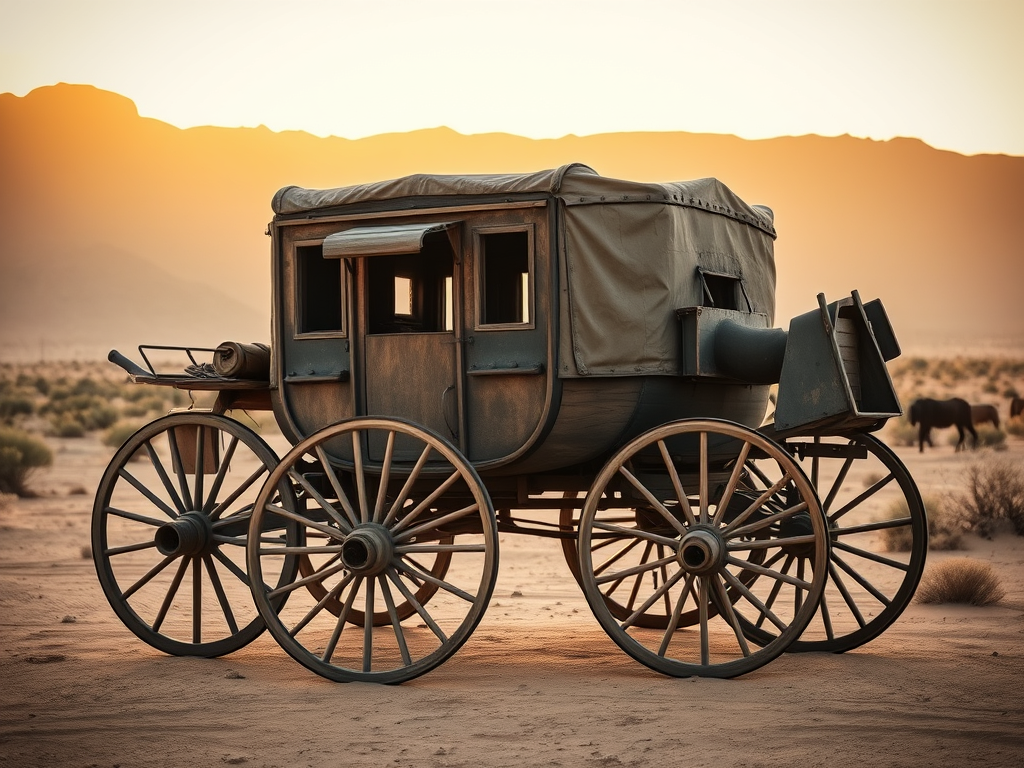
Cooke’s Canyon is a valley located in the Cooke’s Range, a southern continuation of the Mimbres Mountains, in present-day Luna County, New Mexico. The canyon was named for Lieutenant Colonel Philip St. George Cooke, the commanding officer of the Mormon Battalion during the Mexican War (1846-48). He later served in the Union Army during the American Civil War (1861-65).
Historian Jay W. Sharp asserts that during the 1860s, Cooke’s Canyon, in the heart of Chiricahua Apache territory, was ‘probably the most fearsome single passage on any of the trails across the desert southwest.’ Sharp adds that the Apache tribesmen, under the leadership of the legendary Cochise and his father-in-law, Mangas Coloradas (Red Sleeves), ‘left dozens to hundreds of dead and wounded lying along the Cooke’s Canyon trailway or battlefields.’
The Butterfield Overland Mail Company operated a way station near Cooke’s Spring in Cooke’s Canyon. Butterfield Overland Mail had been established in 1857 and ran stages carrying mail and passengers from Memphis and St. Louis to San Francisco.
The two routes converged at Fort Smith, Arkansas, before heading through Indian Territory (Oklahoma), Texas, New Mexico (Passing through Cooke’s Canyon), Arizona, Mexico, before ending its journey in San Francisco, California.
In early 1861, relations between the Apache and the Americans, always tense, deteriorated dramatically after Felix Ward, the adopted son of John Ward, a rancher in Arizona’s Sonoita Valley, was stolen along with some oxen by a group of Apaches. Cochise’s band were erroneously accused of the abduction.
In February of that year, Cochise was invited to meet with Lieutenant George Bascom, who was based at Fort Buchanan. Cochise and his coterie met with Bascom at Apache Pass. The talks occurred inside a tent. After the Apache had entered the tent, soldiers encircled it.
Bascom accused Cochise of taking Felix Ward. The Chiricahua leader vehemently denied having anything to do with the boy’s abduction, but to pacify Bascom, he offered to get Felix back from the tribe that had taken him.
Bascom rebuffed Cochise’s attempts at conciliation, telling the chief that he would be held until the boy was returned. In response, Cochise drew his knife and slashed through the tent and dashed away as a fusilade of gunshots was fired after him. The three other Apaches were retained as prisoners by Bascom.
In response, two days later, Cochise and his followers captured four white men, whom they offered to exchange for the men held by Bascom. The lieutenant would only agree to the exchange if Felix Ward were returned, which was something that was beyond Cochise’s control.
Shortly afterwards, a detachment under surgeon Bernard Irwin arrived at Apache Pass, bringing with them three adult Apaches they had captured en route. A few days later, another detachment, larger than either of the previous, also arrived.
Believing his people to be at war with the whites, Cochise had his four prisoners put to death within sight of the soldiers. In response, Irwin determined that the Apache prisoners should be executed in retaliation, but when Bascom demurred, Irwin asserted his right to hang his own prisoners; Bascom then assented, and all six Apache were hanged. This incident at Apache Pass kicked off two and a half decades of war between the United States and the Apache.
In the summer of 1861, a caravan led by Felix Grundy Ake, consisting of seven wagons, two buggies, and over a thousand head of livestock, heading east from Tucson, passed through Cooke’s Canyon.
The Apache under the leadership of Mangas Coloradas watched the party as they entered the canyon. The livestock was driven into the canyon first, followed by the wagons and their mounted escorts. The members of the Ake party’s senses had been heightened by the discovery of the remains of two men killed in an ambush by the Apache a few days before.
The Apaches waited until livestock and wagons were within the canyon before they launched their attack. As the attackers laid down a withering fire of arrows and bullets, the men guiding the lead wagons managed to manoeuvre the conveyances to make a triangular fortification, affording some protection from which they could return fire on their assailants.
The men driving the trailing wagons, with, apparently, their own survival their only concern, managed to turn the wagons around and raced away to the west, towards the Mimbres River and safety, leaving their travelling companions to their fate.
The Apache succeeded in capturing around 400 cattle and an additional 900 sheep, planning to sell them south of the border in the Mexican state of Chihuahua. Four of the Ake party had been killed in the ambush, and several more were wounded. The Apache force lost an unverified number of warriors to the settlers’ bullets.
That same summer, the attack on the Freeman Thomas party also occurred. Originally from Ohio, 29-year-old Thomas was listed in the 1860 Texas census as a grocer residing in El Paso. The following year, he was making his living as a ‘conductor’ for the Overland Mail Company stage that ran between Mesilla and the Pacific coast.
On 20 July, Thomas and six other men, commonly, if erroneously, known as the Free Thompson group, left Mesilla heading west. The rest of the party was 26-year-old German-born driver Joseph Roeschler, John Wilson, and John Portell, who had earlier shot and wounded Virgil Mastin, a man with secessionist sympathies, who would himself be killed by Apaches in 1868, Robert Avaline, Matthew Champion, who was possibly originally from St. Louis, and, in 1859, was an employee of Arizona’s Santa Rita Silver Mining Company.
The sixth member of the company was Emmett Mills, born near Thorntown, Indiana, in 1841. He was the younger brother of the more famous Anson Mills, who had a long and storied career in the military, retiring as a brigadier general in 1897.
Anson and Emmett Mills, along with a third brother, William, established a ranch appropriately named Los Tres Hermanos (The Three Brothers), about 18 miles from El Paso in 1859. The ranch became a stage stop on the Overland Mail line.
Aware of the possibility of attack by hostile Apaches, Thomas armed his men with breech-loading Sharps’ rifles. All of the men were cognisant of the threat that lay ahead; all had seen the result of Apache attacks, and some may have fought the Apache before.
The coach travelled north along the western bank of the Rio Grande through the Mesilla Valley to the Picacho station, where it headed west past the 1,500-foot-high Picacho Peak, now part of Picacho Peak State Park.
They traversed the 50-mile stretch of desert that led to Cooke’s Spring and the eastern entrance to Cooke’s Canyon, where it is believed they rested overnight. The party rose early the next morning and headed into the canyon.
The Apaches, watching the progress of the Freeman Thomas Party, launched their ambush as soon as the stage entered the eastern side of the gorge.
In the initial stages of the attack, one of the members of the party, possibly Joseph Roeschler, received a wound, as it was Thomas who steered the coach southward, heading for higher, more defensible ground.
Thomas and his men unhitched the draft animals from the coach and drove them towards the attackers, hoping the Apache would abandon the fight to pursue the animals. The plan failed, and the Apaches laid down an enfilading fire on the party as they removed their ammunition, weapons, and water from the coach and threw up defensive breastworks.
The defenders fought off waves of attacks by their adversaries. Citizens in the Mexican town of Janos reported later that Mangas Coloradas lost about 40 of his followers to the guns of the seven-man party, and abandoned the fight, leaving Cochise, who had possibly been wounded in the engagement, to finish the job.
The men of the Freeman Thomas Party lay besieged within their hastily constructed breastworks at least until 22 July, possibly until the following day. Mills, Roeschler, Avaline, and Portell died inside their makeshift fortifications.
The other three men died outside the breastworks, apparently trying to escape. Champion and Thomas’ bodies were found 60 yards from the walls. Wilson managed to make 150 yards before being slain.
© Mark Young 2025
Sources
Encyclopedia of Frontier Biography Vols. I, II and III. By Dan L. Thrapp.
https://en.wikipedia.org/wiki/Cookes_Range
https://en.wikipedia.org/wiki/Cooke%27s_Canyon

 Hellish Fiends, and Brutish Men
Leave a comment